WHITE KEESHOND PUPPIES
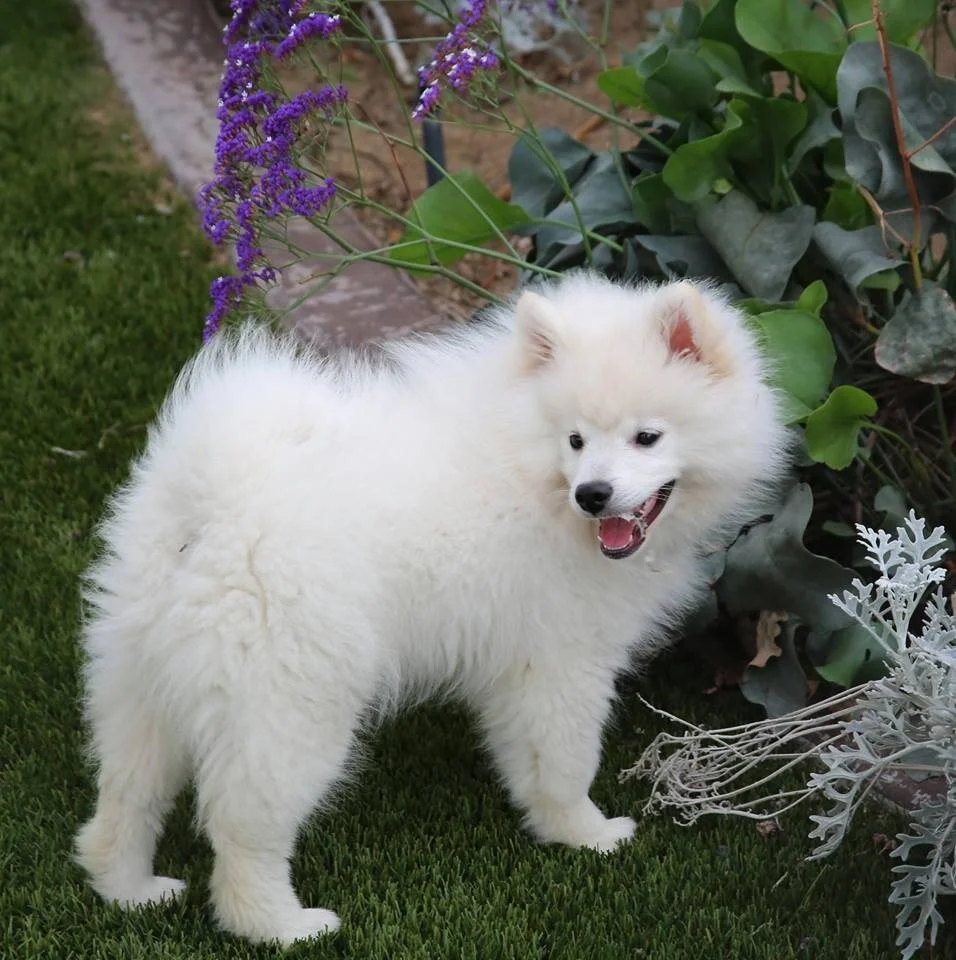
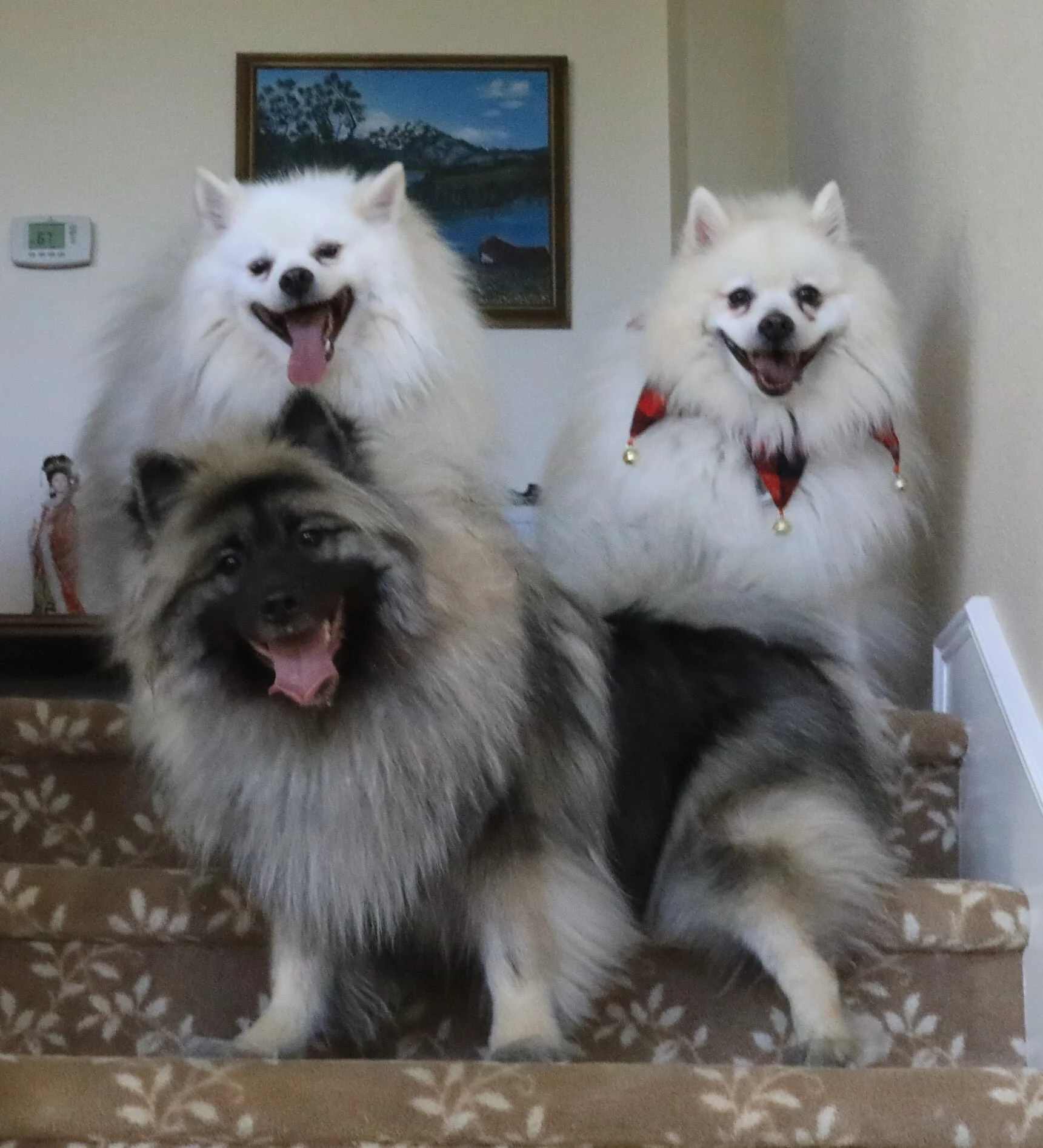
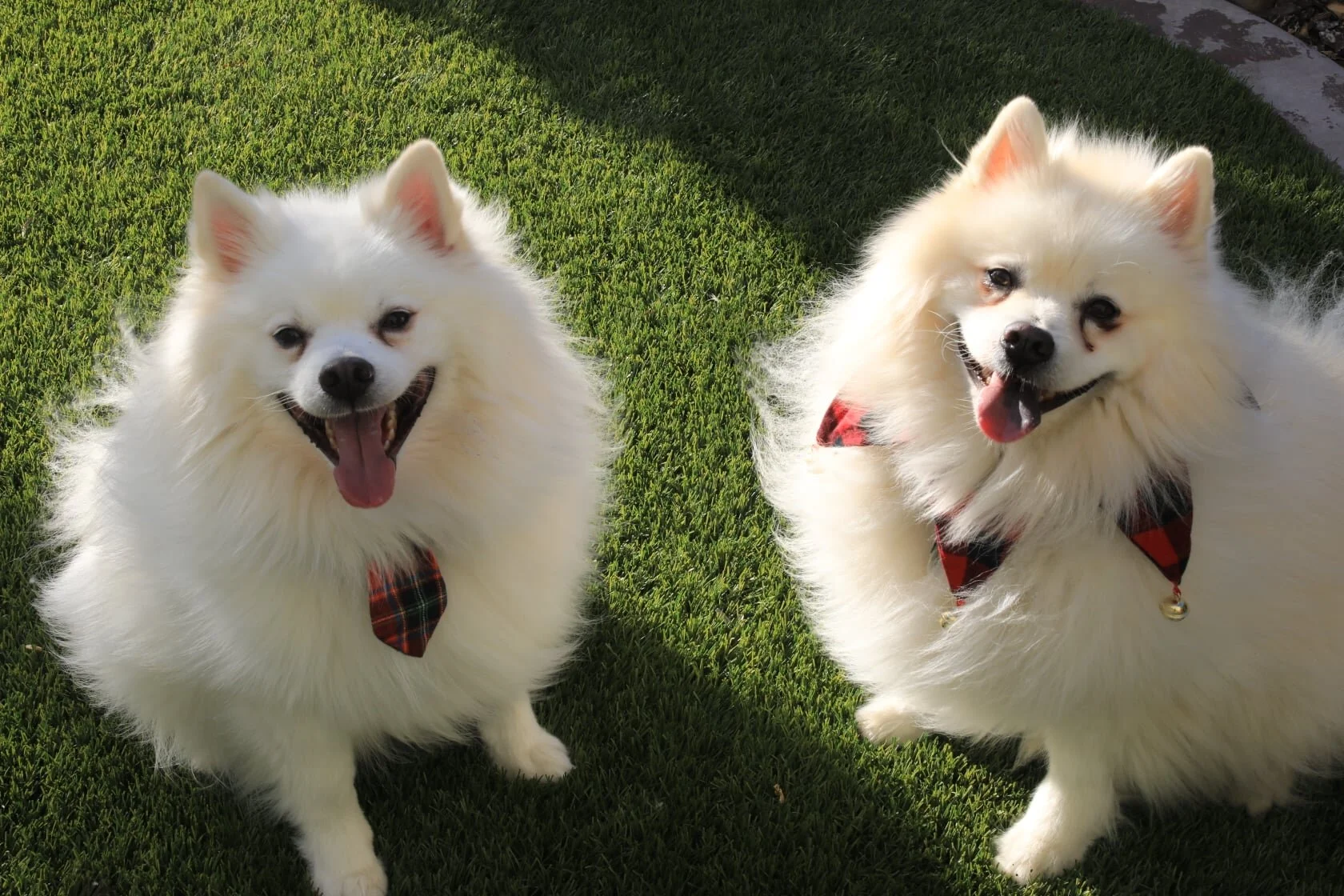
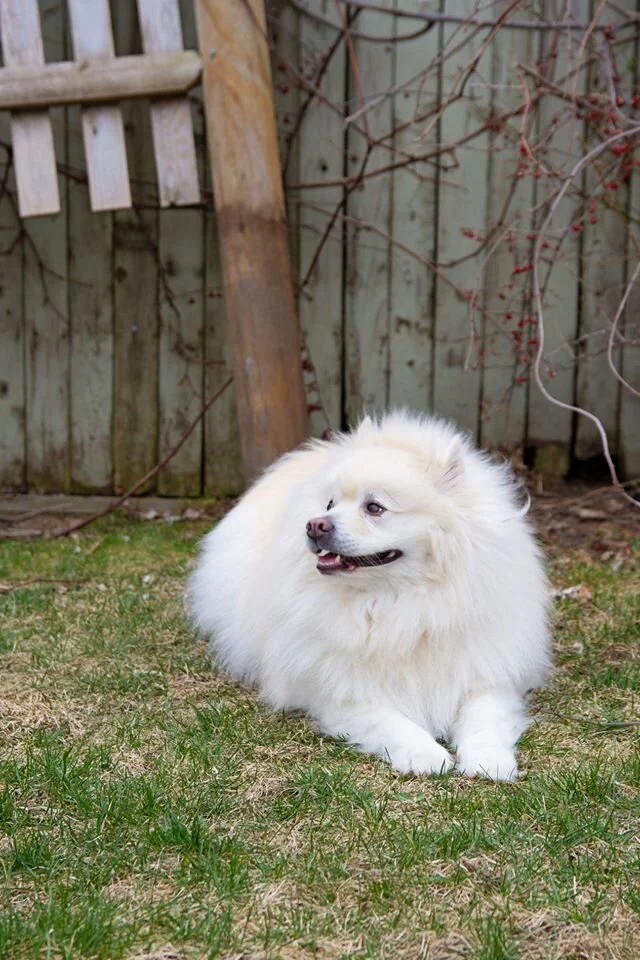
ERBEKEES occasionally has white Keeshond puppies available. I have been working for several years to carefully develop my white Keeshond lines, and I expect to have a limited number of white puppies available throughout the year.
These puppies are raised with the same focus on health, temperament and companionship as my traditional black-and-silver Keeshonden.
YES, THEY ARE KEESHONDEN
Yes, my white puppies are Keeshonden. They are produced from Keeshond parents, and I am not introducing another breed to create the white coloring. My breeding dogs have AKC DNA profiles, with DNA samples collected by my veterinarian or veterinary staff.
HOW DO I GET WHITE KEESHOND PUPPIES?
White Keeshonden don't come from breeding a Keeshond to a different breed. The ability to produce white is already present within certain Keeshond bloodlines.
I have spent years identifying and developing Keeshonden that carry the genetics necessary to produce white puppies. Both parents must carry the gene associated with the white coloring for white puppies to be possible.
Even when both parents carry it, that does not mean the entire litter will be white. A litter may contain traditional black-and-silver puppies along with only one, two or three white puppies — and sometimes there may be no white puppies at all.
That unpredictability is one of the reasons ERBEKEES white Keeshonden are produced in limited numbers.
HOW I TEST FOR THE WHITE GENE
I don't breed for white puppies based on appearance or guesswork. I use DNA testing to determine which of my Keeshonden carry the genetics necessary to produce white.
This allows me to make informed breeding decisions and to know which pairings have the possibility of producing white puppies. A traditional black-and-silver Keeshond can carry the gene without looking any different from any other Keeshond.
DNA testing is an important part of the work I have done over the years to develop my white Keeshond lines while continuing to focus on the things that matter most to me — health, temperament and the qualities that make a Keeshond a Keeshond.
White is a color I can breed for. It is never more important than the dog I am producing.
WHY ARE SOME KEESHONDEN WHITE?
The traditional Keeshond is known for its beautiful black-and-silver coat, but the genetics for white coloring can be carried without being visible. A black-and-silver Keeshond may carry the genetics for white and look completely traditional.
When two Keeshonden that carry the necessary genetics are bred together, there is a possibility of producing white puppies. That is why white puppies can appear in the same litter as traditional black-and-silver puppies.
The white color does not make them a different breed. They are still Keeshonden, with the same wonderful temperament, intelligence, devotion and personality that make this breed so special.
At ERBEKEES, I have worked deliberately with these genetics for years. My goal isn't simply to produce a white dog — my goal is to produce a healthy, well-tempered Keeshond that happens to be white.
ARE WHITE KEESHONDEN AKC REGISTERED?
Yes. My white puppies are registered with the American Kennel Club as Keeshonden, just like my traditional black-and-silver puppies.
White is not an AKC breed-standard color for the Keeshond, which means a white Keeshond would not meet the color requirements for AKC conformation showing. That does not change the puppy's breed or prevent AKC registration.
My white puppies are produced from AKC-registered Keeshond parents, and I maintain AKC DNA profiles on my breeding dogs as an additional way of documenting parentage within my breeding program.
For families who simply want a wonderful Keeshond companion, the difference is the color — they are every bit as much a Keeshond as their black-and-silver littermates.
ARE WHITE KEESHONDEN HEALTHY?
White does not automatically mean albino, deaf or blind.
A white coat is a color, and a white dog should not automatically be assumed to have albinism or a hearing or vision disorder. True albinism is a specific genetic condition involving the production of pigment and is different from simply having a white coat.
There are certain pigmentation genes and patterns in dogs that have been associated with an increased risk of congenital deafness or eye abnormalities, which is one reason understanding the genetics behind a dog's color matters.
At ERBEKEES, I don't simply breed two dogs because I hope they will produce white puppies. I use DNA testing and carefully planned breeding decisions to understand the genetics I am working with.
My white Keeshonden receive the same health testing, veterinary care and careful breeding consideration as my traditional black-and-silver Keeshonden. I will never lower my standards for health or temperament simply to produce a particular color.
My goal isn't just to produce a white dog. My goal is to produce a healthy, well-tempered Keeshond that happens to be white.
HOW OFTEN DO I HAVE WHITE KEESHOND PUPPIES?
White puppies are not produced in every ERBEKEES litter, and I cannot guarantee how many white puppies a particular breeding will produce.
Even when I breed two dogs with the genetics necessary to produce white, nature still decides the outcome. A litter may have several white puppies, only one, or none at all.
I plan my breedings based on health, temperament, pedigree and the overall quality of the pairing first. The possibility of producing white is an additional consideration — not the reason I make a breeding decision.
Because of this, white ERBEKEES puppies are produced in limited numbers, and families specifically hoping for a white puppy may need to be patient.
I don't breed more litters simply to produce more white puppies. The right breeding comes first. The color comes second.
DO WHITE KEESHONDEN STAY WHITE?
Yes. My white Keeshonden are born white and remain white as they mature, although—as with any dog—the exact shade and appearance of the coat can change somewhat as the puppy coat is replaced by the adult coat.
They still develop the beautiful double coat, mane, plume tail and overall appearance we associate with the Keeshond. The biggest visual difference is obvious: instead of the traditional black-and-silver coloring, their coat is white.
And underneath that white coat is still everything I love about this breed — the intelligence, personality, devotion and desire to be part of the family.
Different color. Same Keeshond.